

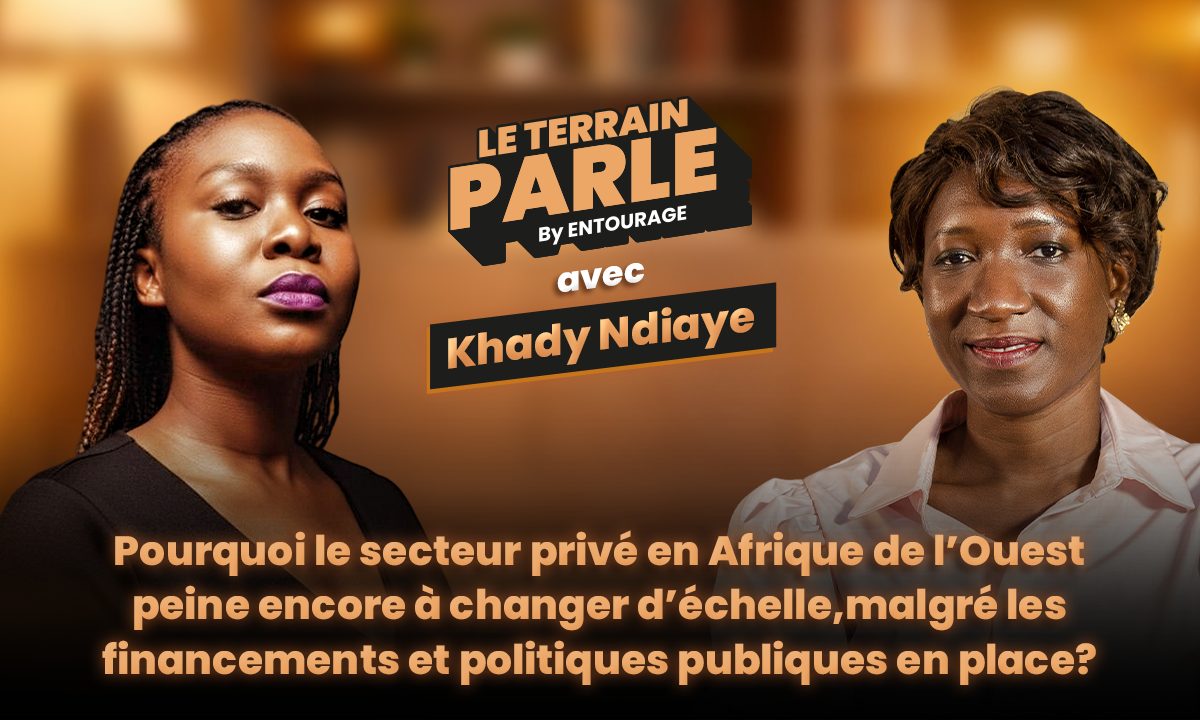
Why does the private sector in West Africa still struggle to scale, despite the financing mechanisms and public policies already in place?
If you are:
- An entrepreneur in a growth or structuring phase
- An institutional leader or stakeholder within the economic ecosystem
- An investor interested in regional dynamics
👉 This free episode is made for you !
ABOUT THIS EPISODE
In recent years, reforms have multiplied. Financing instruments exist. Industrial and regional strategies have been defined. And yet, on the ground, many companies struggle to reach a decisive milestone: scaling up.
In this episode of Le Terrain Parle, Khady Ndiaye offers a structured and institutional perspective on the real barriers to private sector development in West Africa. A conversation grounded in the realities of businesses, institutions, and economic policies — far from oversimplified narratives.
YOU WILL DISCOVER...
Our Guest Expert

Khady Ndiaye
Khady Ndiaye is a recognized expert in private sector development in West Africa. For over fifteen years, she has worked at the intersection of public policy, business competitiveness, and the structuring of economic ecosystems. She currently serves as Director of the Private Sector at the UEMOA Commission, where she leads major initiatives related to industry, craftsmanship, quality standards, investment promotion, regional competitiveness, and the improvement of the business climate.
